




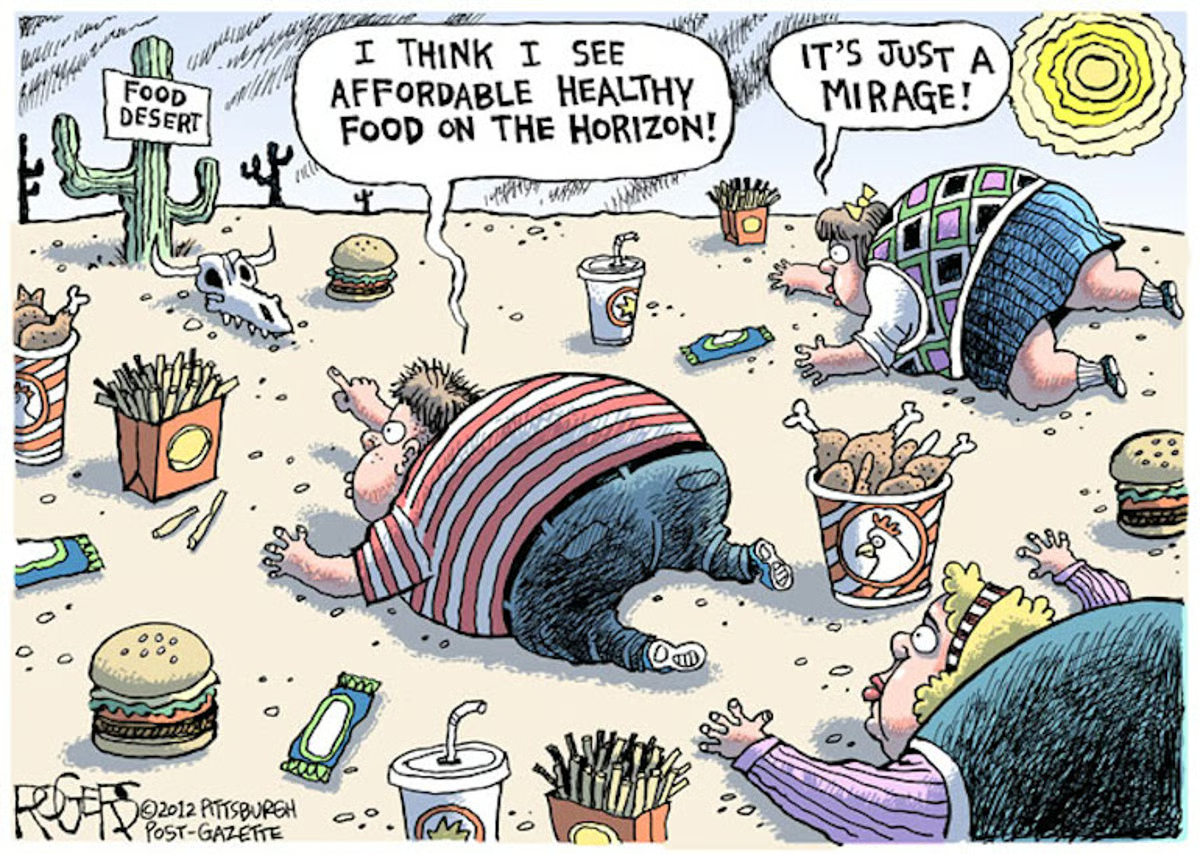
Obesity is increasing rapidly. America is getting bigger—and not just geographically. “Data suggests that the global burden of obesity has more than tripled since 1975.” (frontiersin.org) Around 40% of U.S. adults are considered obese. (Obesity and Severe Obesity Prevalence in Adults: United States) As obesity rises at an alarming pace, it turns a long-standing public health issue into a fast moving American crisis. After all, as the cost of fresh, nutritious food climbs and cheaper, fat-heavy foods dominate, people with fewer financial resources are disproportionately pushed toward unhealthy diets. (Editorial: The obesity epidemic: Causes, context, prevention)
The problem is that communities with lower incomes can’t afford healthy, nutritious food. Fast food, filled with harmful chemicals, is prominent in poorer neighborhoods. Businesses that thrive under a capitalist model that reward low cost and high volume fill the gap with cheap, ultra processed foods. This imbalance isn’t accidental and reflects how profit-driven systems prioritize efficiency over community health and fueling obesity rates. The result is a widening health gap, opening the door to countless risks—type 2 diabetes, heart disease, stroke, cancers, and sleep apnea. (Health Risks of Overweight & Obesity – NIDDK) This issue is unavoidable for people who live in food deserts—an area with limited access to affordable, nutritious food, characterized by a prevalence of convenience and fast food establishments.
Food deserts are a large, predominant issue in America’s rising obesity rates. In the United States, access to fresh food is limited for 40.5 million Americans living in USDA-designated food deserts nationwide. (Food Deserts in America) These food deserts are littered across the west coast, with millions of individuals opting for cheap, convenient fast food over the 30 minute drive to a grocery store.
The connection between food deserts and obesity has been explored numerous times. A study published in the Journal of Obesity found a negative correlation between mRFEI, which measures healthfulness of a neighborhood’s food supply, and obesity rate, “suggesting that lack of access to healthy food is associated with obesity”. (Impact of Food Environments on Obesity Rates: A State‐Level Analysis) Additionally, research by graduate professors across the United States more deeply analyzed this association, finding that distance to store and prices were positively associated with obesity. (Distance to Store, Food Prices, and Obesity in Urban Food Deserts – PMC)
If people are in environments with little access to healthy food, and the healthy food they do have is at a high price, it’s evident that they’ll opt for processed, fatty foods, contributing to unhealthy practices. However, this situation is not hopeless.
Decreasing obesity rates, despite the complexity of the issue, is not as complicated as it sounds. Local food and farmers markets are an amazing, community centered way to mitigate food deserts. According to Augusta University, they are cheaper, more mobile, and less space consuming than regular stores. This solution has been tried and tested in the Ron Finley Project, where a food justice activist from Los Angeles converted a 150-by-10-foot strip of land in front of his residence into an edible garden. He successfully cut down his forty-five minute journey to a five second walk.
Provo is a longtime proponent of farmer’s markets. Every Saturday morning in the spring and summer, Provo’s locals gather to sell their home grown produce and clothing items. Although Provo isn’t a food desert, it’s a good example of possible solutions to America’s obesity problem.
Since there’s so many options for healthy food in our town, make sure you take advantage of it!