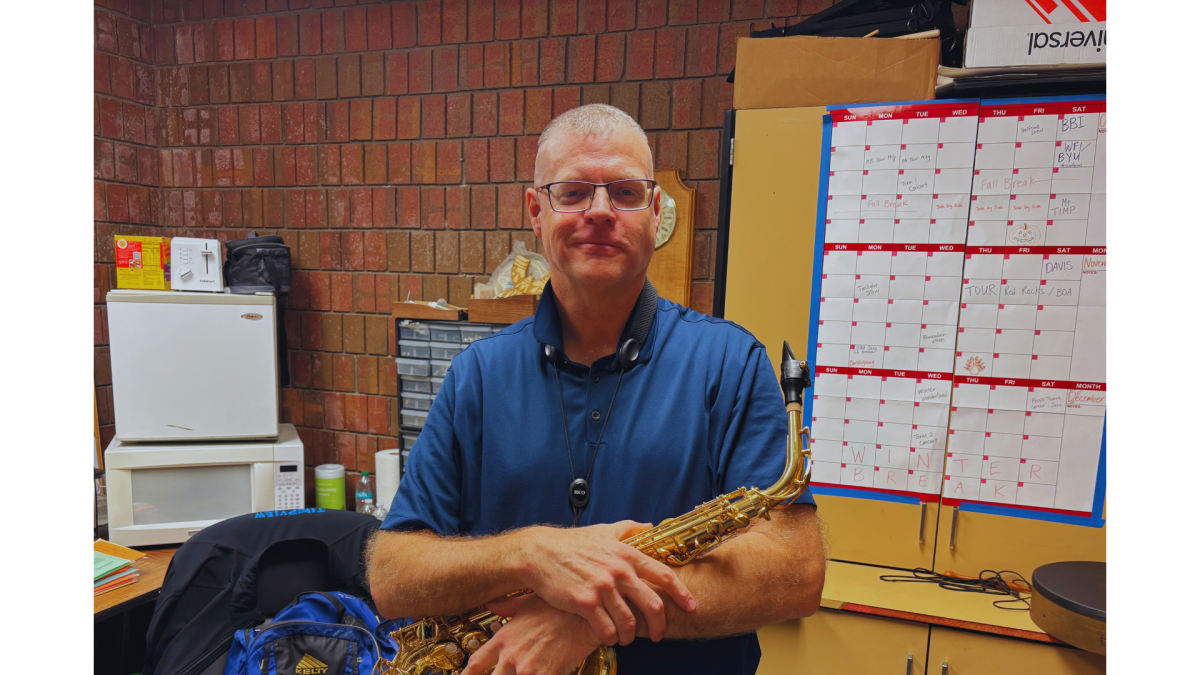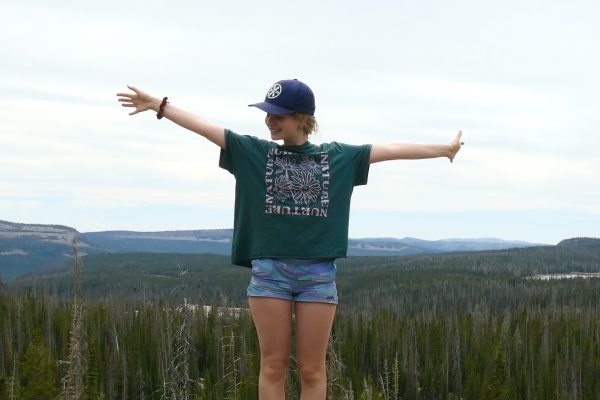



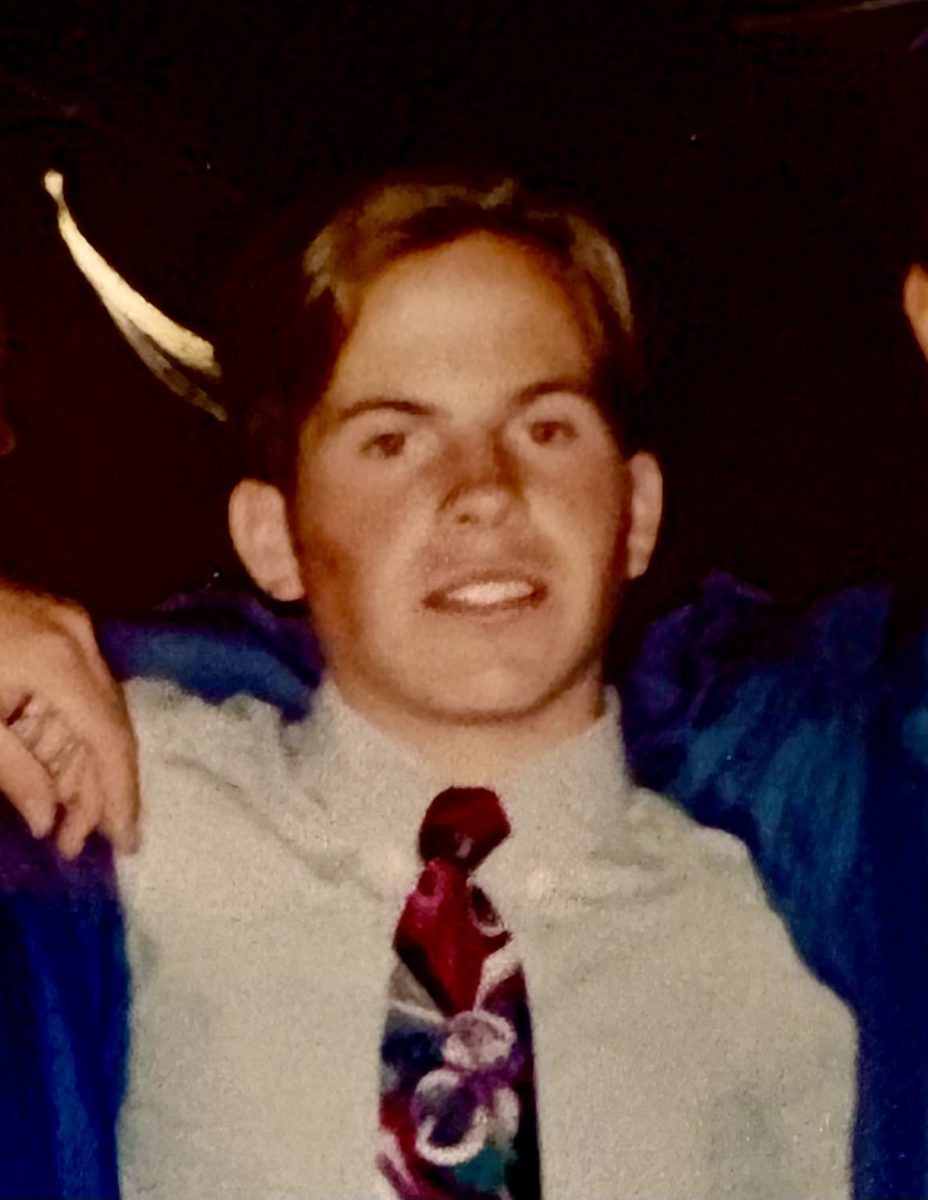
This week I talked with Jeremy Stevenson, Timpview’s AP Psychology and AP U.S. History teacher.
- What was your favorite subject in high school? Did you have a good high school experience?
My high school experience was mixed. It was less about the subject and more about the teachers. I didn’t normally like English, but I’d say two of my best teachers were English teachers. At the end of my junior year, the AP English teacher, who happened to be a family friend, approached me and asked me if I was going to take his class. I didn’t think I could take an AP class because I had never taken Honors English, but that teacher encouraged me to. So I took his class, I felt like the dumbest kid in the class, but I learned a lot. High school as a whole, especially the social aspect of it, was a mixture of highs and lows. I was a bit of a late bloomer, so I looked a little younger than a lot of my classmates, particularly the females. I also spent my Sophomore year hanging out with the “Cool” kids, which ended up being pretty frustrating and lame. I wised up and returned to some old friends and made some new ones who shared similar interests. My last 18 months of High school was a lot of fun. We went on a lot of “planned” dates, we skied, mountain biked, and played a lot of Soccer. That being said, I was not sad when high school ended. It was the high point of my life, I enjoyed College a lot more. Which is ironic, because I ended up as a high school teacher.
- Is high school now super different from how high school was when you went?
Nope. Human beings are still human beings. Observing High School students and teaching World Geography, World History, US History, and Psychology over the past 25 years, I have learned that human behaviors really don’t drastically change over time. The cliques that existed back then still exist today. Social media heightens some of the connectivity and ostracism that takes place, but it’s not really that different as far as who’s considered cool and who’s not cool. I don’t want this to come across as negative, but there’s a small mindedness that exists when you’re in a small little bubble. It’s not your fault, it’s just a natural phenomenon. While your generation’s bubble is a little bigger because you can communicate with more people outside of your geographic bubble, via social media, at the same time, your world is still most strongly influenced by your high school community.
- Why are you interested in psychology and history?
I didn’t take psychology in high school even though it was offered. As a Freshman in college, I initially declared as a Psychology Major. Unfortunately, my Intro to Psychology professor was really boring, so I changed my Major. When I decided that I wanted to be a Social Science teacher, I was required to take history, psychology, geography, sociology, political science, and economics classes. It was a little of everything and I found that I really loved it. It helped me understand myself and the world better. As I was working on that, I had to take two or three different psychology classes, and I found it just fascinating. So that’s how I initially got into Psychology. I’m also a middle child too, so I have always been a natural observer of the inequalities in my home and community. As I share in my AP Psychology class, I had several siblings and friends, who got involved in drug abuse, and so I’ve seen and been interested in a wide variety of human behavior as a young kid. I was also always curious, and have thought “Why do some people do this and others don’t?’ So some of those questions led me in that direction.
- If you weren’t a teacher what do you think you would be doing?
There was a time where I thought, with my military background and language skills, I would work for the FBI, the CIA or some type of Intelligence agency. I did enjoy my military deployments doing intelligence work, it’s interesting, and it’s engaging. But it’s hard to do on a daily basis and still have a balanced family life. My college degree also lines up well with the U.S. State Department, so there was a time I looked into being a Foreign Service Officer. But I did not want my kids to have to move to a new country every 2-3 years.
- What is the most rewarding aspect of your job?
Though I didn’t enjoy high school, I do enjoy working with high school age and college age kids. In high school, a lot of kids are starting to think on their own and trying to figure things out and asking some deeper questions. I like being able to have those conversations with them. Also getting to know and building relationships with students through the content. I really love teaching psychology because it’s something that is immediately applicable in everyone’s life. Students are not required to take it, so if they do, they are generally interested and engaged. It also helps that it is an AP class where I can expect more out of them. If they decide it is too much, they drop the class by the end of the 1st term. So it just creates a really great environment. I loved teaching World Geography and US History as well, but not as many students are as intuitively interested in those topics.
- What is your approach to handling controversial or sensitive topics in the classroom?
I taught World geography for 19 years and I now teach US history and Psychology. Each of those subjects include politically and socially sensitive topics. At the end of college, I attended a summer term at the Jerusalem center, through BYU. 50% or more of the curriculum was focused on the history and the current issues involving the Arab Israeli conflict. They taught it from multiple perspectives. One day they brought in an Israeli professor, the next day was a Palestinian professor, and then the next day was an American Near Eastern study specialist. They repeated that over and over for several weeks ensuring that we learned about the conflict from the three main perspectives. So I left that experience and I came home, and I thought, ‘alright, that’s what I want to do.’ I also had some professors at BYU that were pretty good at teaching that way as well. They would never tell you their opinion, they would just teach you how to look at the topic from multiple perspectives. In psychology, we’re about to do a unit on human sexuality. That can be a really controversial topic. So how do you teach that without stepping on a figurative landmine? At the beginning of the year, we went through the 8 different perspectives of psychology. Just like every other topic, when we come to more difficult topics, we approach it from each of the 8 modern perspectives. What would the evolutionary folks say? What would the psychoanalytical say? What the social cultural, humanistic, cognitive, or behaviorists say? Usually the answer is very eclectic. I make my mistakes at times, but my goal is at the end of the year, students know how to think and approach things, but they don’t know how I think about a particular topic or issue.