



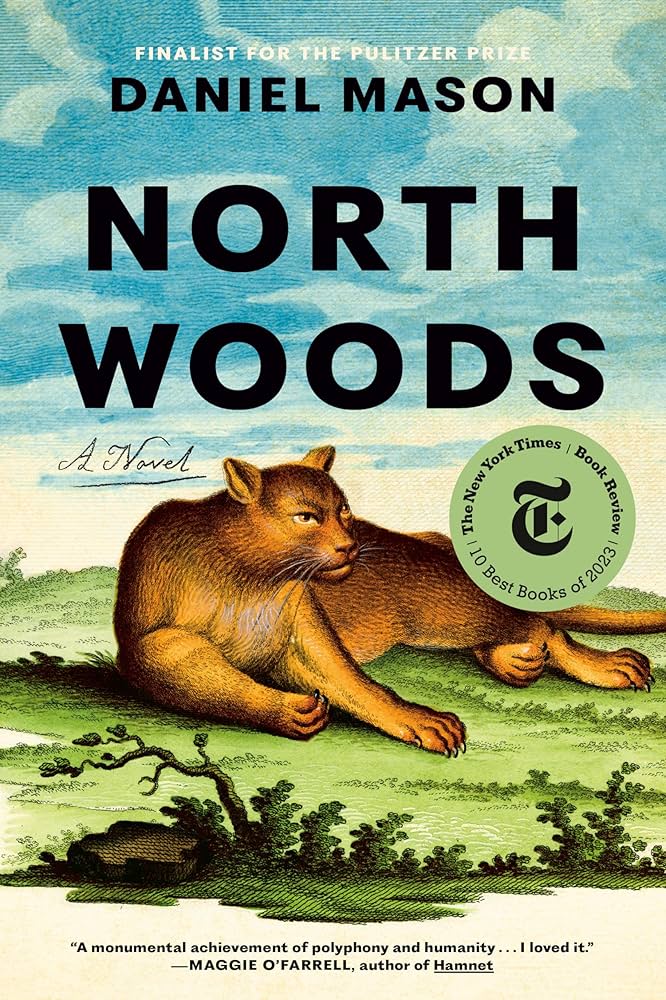
Daniel Mason’s North Woods is one of those rare novels that feels both personal and enormous at the same time. On the surface, it’s a story about a single house tucked deep in the New England woods. But Mason uses that ‘yellow house’ as a deeper look into something much larger, the way human lives stick across generations, and how the land remembers everything we forget. The result is a novel that feels less like reading a story and more like walking through layers of history, emotion, and hushed mysteries.
What makes North Woods so powerful is its sense of continuity. Characters come and go, but the land remains, absorbing their joys, their grief, their secrets, and their transformations. Mason writes with a kind of gentle precision, creating scenes that feel stuck in time. Without revealing any plot details, it’s safe to say the book asks big questions about belonging, legacy, and the marks we leave on the world…even when we don’t realize we’re leaving them.
The novel also resonated with readers beyond only me. Timpview High School Junior, Sydney Overton said, “It has definitely been the best book I have ever read. The character building and recurring themes make the novel interesting and very insightful”. That shared enthusiasm says a lot about the book’s emotional reach. North Woods isn’t just beautifully written, it’s deeply felt. It’s the kind of novel that lingers long after closing the book, not because of any single twist or revelation, but because of the way it quietly reshapes how you think about time and place.
For its lyrical writing, layered meaning, and unforgettable atmosphere, I would confidently rate North Woods a 5/5. It’s a book that rewards patience, curiosity, and reflection, and is one I’d recommend to anyone who loves stories that stay with you.












Nellie Miller • Apr 20, 2026 at 9:35 PM
Now I absolutely MUST read this book! I love exploring how we preserve memory, such as with West African griots who orally transfer the history of their people or a similar concept in Maori culture. This book seems especially pertinent in a time where globalization and media warp not only cultures but our personal perception of history and the contemporary.