


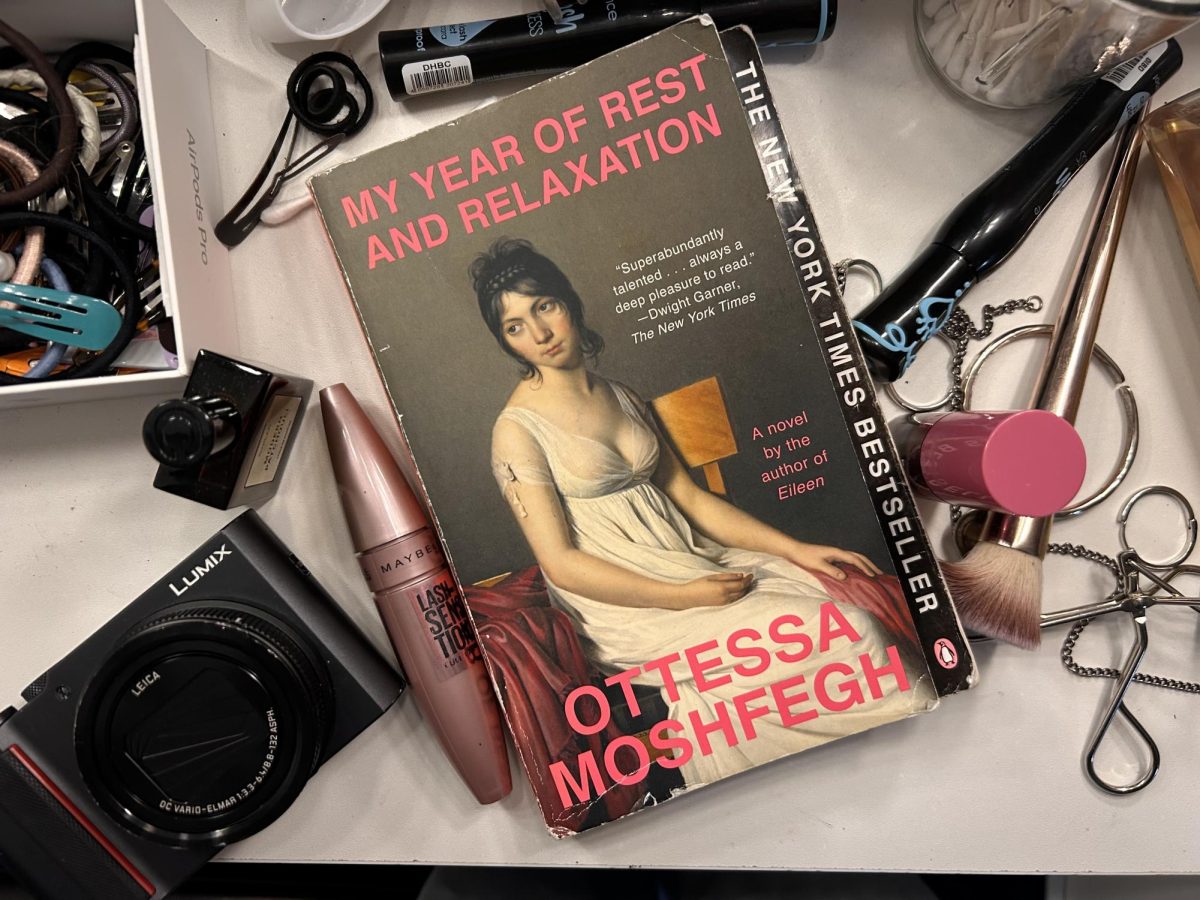
Imagine solving your pain by opting out of life for a year and blocking out everything from your life. No job, no work, no family and no friends. My Year of Rest and Relaxation (2018) by Ottessa Moshfegh is a novel that explores this idea.
The unnamed narrator—a pretty Columbia graduate—lives alone in her fancy upper east side apartment paid for by her inheritance. She seems to have everything, yet beneath her ‘perfect life’ she has intense grief about the recent death of her parents. Instead of showing her sorrow, she buries her pain and pushes it further and further down. Her pain turns into numbness. This emotional void drives her to decide that the best way to feel better is to feel nothing at all, leading her to start a “pharmaceutical hibernation.” With the help of her doctor, who gives her a fictional blackout-inducing drug called “infermiterol”, she locks herself up in her apartment. She goes out only for coffee and animal crackers. Her decision to sleep away a year is not out of laziness but instead is a response to grief so deep that consciousness itself feels unbearable.
One of the novel’s most prominent themes is alienation and privilege. The narrator can attempt this year-long disappearance only because she has so much money. Her financial cushion removes consequences since she has no job to lose, no rent to worry about and no responsibilities.The narrator’s isolation is self imposed, but yet it reflects a wider cultural loneliness masked with an “ideal life”.
Closely related is the novel’s exploration of self care versus self destruction. The narrator explains how her hibernation is a healing project, and that it is a much needed break from life. Even though she insists that this hibernation is positive, Moshfegh never states whether her plan is therapeutic or harmful.
When the narrator decides to start her life again in June 2001 feeling “renewed,” it seems like her experiment has worked, until the story ends with the September 11 attacks where Reva dies. The ending smashes the idea of any good resolution. Watching footage of a falling figure that she is convinced is Reva, the narrator describes her as “wide awake” and “beautiful,” realizing that consciousness, not escape, is what gives life meaning.
Overall I would give this book a 9/10. My year of rest and relaxation is less about sleep and more about avoidance of grief, connection, and reality. I loved how sadness is portrayed as detachment. Even though the whole story seems ridiculous, I think it also seems plausible. While it started off slow and not much happened, it gave me a new perspective on comfort, and it showed that numbness is not peace.